Home Healthcare vs Traditional hospital care which one is better
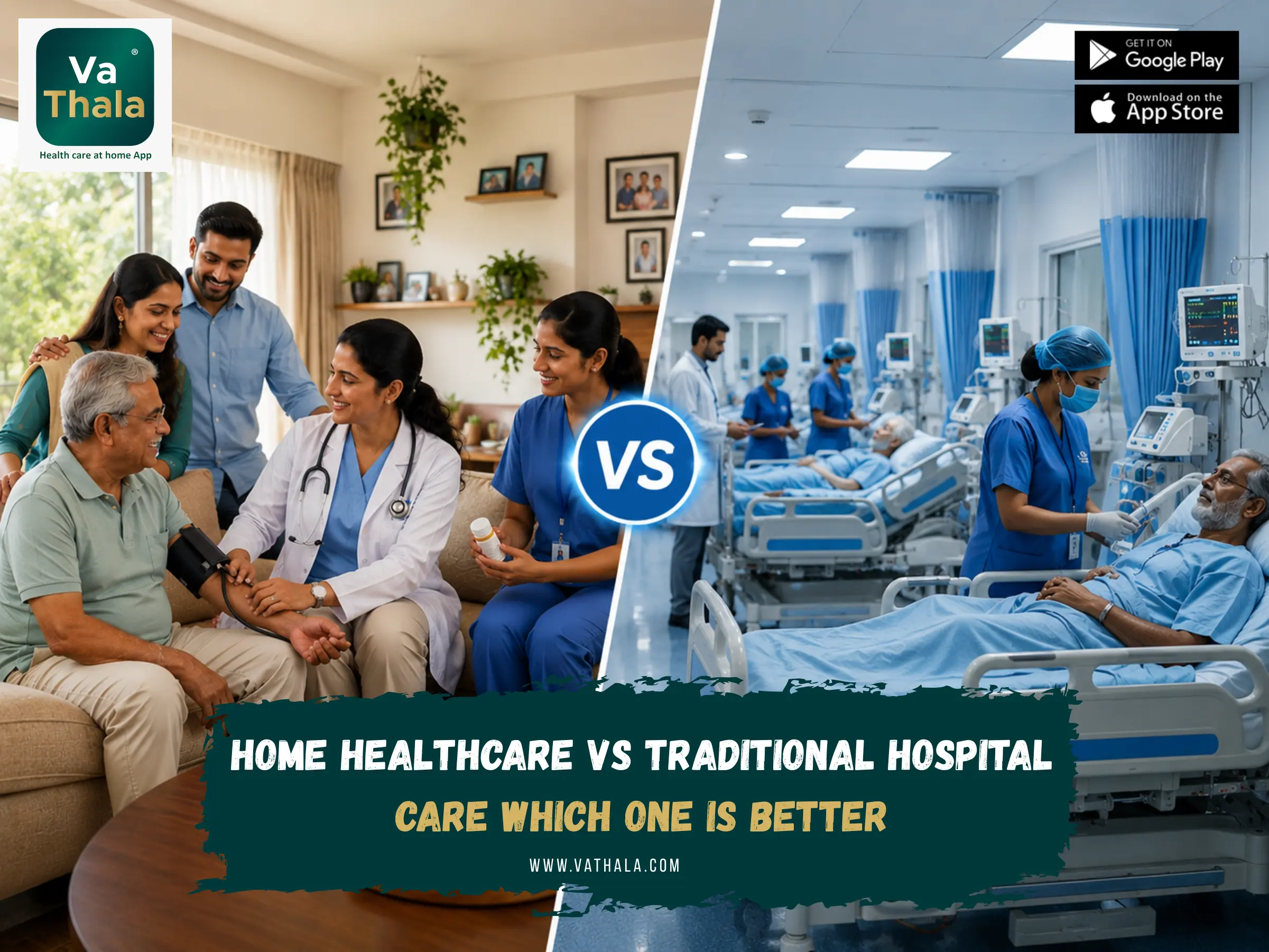
The way people access healthcare has changed significantly over the last few years. Today, patients no longer need to visit a hospital for every medical concern. With the growth of home healthcare services and digital healthcare platforms like VaThala, quality medical care can now be delivered directly to your doorstep.
However, many families still have one important question:
Should you choose Home Healthcare or Hospital Care?
The answer depends on the patient's condition, medical requirements, comfort level, and long-term care needs. In this guide, we'll explore the key differences between home healthcare and hospital care to help you make the right decision for yourself or your loved ones.
What is Home Healthcare?
Home healthcare refers to professional medical and non-medical services provided in the comfort of a patient's home. These services are designed for individuals who require medical attention, recovery support, elderly care, or chronic disease management without being admitted to a hospital.
Home healthcare services may include:
- Doctor Visit at Home Services
- Nursing Care at Home
- Post-Surgery Recovery Care
- Physiotherapy Services
- Elderly Care and Caretaker Support
- Medication Management
- Health Monitoring and Routine Checkups
With platforms like VaThala, booking a qualified doctor or healthcare professional has become quick, safe, and convenient.
Understanding Traditional Hospital Care
Hospital care involves treatment and monitoring within a healthcare facility. Hospitals are equipped with advanced medical infrastructure, emergency departments, intensive care units (ICUs), surgical facilities, and specialized medical teams.
Hospital care is essential for:
- Emergency medical situations
- Major surgeries
- Critical illnesses
- Intensive monitoring
- Complex diagnostic procedures
- Severe injuries and trauma care
While hospitals remain vital for advanced treatments, they may not always be the most comfortable or cost-effective option for long-term care and recovery.
Why More Families Are Choosing Home Healthcare?
1. Comfort and Recovery in a Familiar Environment
One of the biggest advantages of home healthcare is the comfort it provides. Patients recover better when they are surrounded by family members and familiar surroundings.
Unlike hospitals, home care eliminates the stress of travel, waiting rooms, and unfamiliar environments. Patients can follow their treatment plans while maintaining their daily routines and emotional well-being.
A comfortable environment often contributes to faster recovery and improved mental health.
2. Personalized Medical Attention
In hospitals, healthcare professionals often manage multiple patients simultaneously. Home healthcare offers dedicated one-on-one attention tailored to the patient's individual needs.
Doctors and caregivers can spend more time understanding the patient's condition, lifestyle, and recovery goals. This personalized approach helps create more effective treatment plans and improves patient satisfaction.
With Doctor Visit at Home Services, medical care becomes more focused, responsive, and patient-centered.
3. Lower Risk of Hospital-Acquired Infections
Hospitals are places where many patients with different illnesses receive treatment. As a result, there is always a risk of exposure to infections.
Home healthcare significantly reduces this risk by allowing patients to receive treatment in a clean and controlled environment.
This is especially beneficial for:
- Senior citizens
- Post-surgery patients
- Children
- Individuals with weakened immune systems
- Patients with chronic illnesses
Receiving care at home helps minimize unnecessary exposure to infectious diseases and hospital-related complications.
4. Better Support for Elderly Patients
Senior citizens often require regular medical monitoring, medication assistance, and daily living support. Frequent hospital visits can be physically exhausting and emotionally stressful for elderly individuals. Home healthcare brings professional care directly to them, allowing seniors to remain independent and comfortable.
Services such as:
- Elderly Care Services
- Caretaker Assistance
- Home Nursing
- Regular Doctor Visits
help improve quality of life while providing peace of mind to family members.
5. Cost-Effective Long-Term Care
Extended hospital stays can become expensive due to room charges, transportation costs, diagnostic tests, and additional service fees.
Home healthcare offers a more affordable alternative for patients who need ongoing support.
Families can choose only the services they require, making healthcare costs more manageable without compromising quality.For patients recovering from surgery or managing chronic health conditions, home healthcare often delivers excellent value and convenience.
6. Greater Family Involvement
Family support plays an important role in recovery and emotional well-being.Home healthcare allows family members to actively participate in the patient's care journey. They can monitor progress, communicate directly with healthcare professionals, and provide emotional encouragement throughout the recovery process.
This collaborative approach often leads to better treatment outcomes and stronger patient confidence.
7. Technology Has Made Home Healthcare Easier Than Ever
Digital healthcare platforms have transformed the way patients access medical services.
Through the VaThala App, users can:
- Book doctors for home visits
- Schedule healthcare appointments
- Arrange caretaker services
- Access healthcare support quickly
- Manage ongoing treatments
Technology has made professional healthcare more accessible, helping patients receive timely medical attention without leaving their homes.
When Hospital Care Is the Better Option ?
Although home healthcare offers many benefits, hospitals remain essential in situations such as:
- Medical emergencies
- Heart attacks and strokes
- Severe injuries
- Complex surgeries
- Intensive Care Unit (ICU) treatment
- Advanced diagnostic procedures
- Life-threatening conditions
In these cases, immediate access to specialized medical equipment and expert teams is critical.
Final Thoughts
Both home healthcare and hospital care play important roles in modern healthcare. The right choice depends on the patient's medical condition and treatment requirements.For emergencies, surgeries, and critical care, hospitals remain the best option.
For elderly care, chronic disease management, post-hospital recovery, routine checkups, and personalized support, home healthcare offers unmatched comfort, convenience, and affordability.
As healthcare continues to evolve, services like Doctor Visit at Home, Home Nursing, Caretaker Support, and Health Monitoring are helping families receive professional medical care where they feel most comfortable at home.
If you're looking for trusted healthcare services at home, VaThala makes it easier than ever to connect with experienced healthcare professionals and receive quality care right at your doorstep.
Frequently asked questions
- 1. What is the difference between home healthcare and hospital care?
- Home healthcare provides medical services, nursing support, and recovery assistance in the comfort of a patient's home, while hospital care involves treatment within a medical facility equipped for emergencies, surgeries, and critical care.
- 2. Is home healthcare as effective as hospital care?
- Yes, for many non-emergency medical needs such as post-surgery recovery, elderly care, chronic disease management, physiotherapy, and routine health monitoring, home healthcare can be just as effective while offering greater comfort and convenience.
- 3. Who can benefit most from home healthcare services?
- Home healthcare is ideal for senior citizens, post-operative patients, individuals with chronic illnesses, people with mobility challenges, and patients requiring long-term medical supervision and personalized care.
- 4. When should I choose hospital care instead of home healthcare?
- Hospital care is necessary for medical emergencies, severe injuries, major surgeries, intensive care treatment, advanced diagnostics, and conditions that require specialized medical equipment and continuous monitoring.
- 5. Are home healthcare services safe for elderly patients?
- Yes. Home healthcare services are specifically designed to support elderly individuals by providing regular health checkups, medication management, nursing care, and caretaker assistance in a familiar and comfortable environment.
Published by VaThala · More articles